by Celeste Huttes
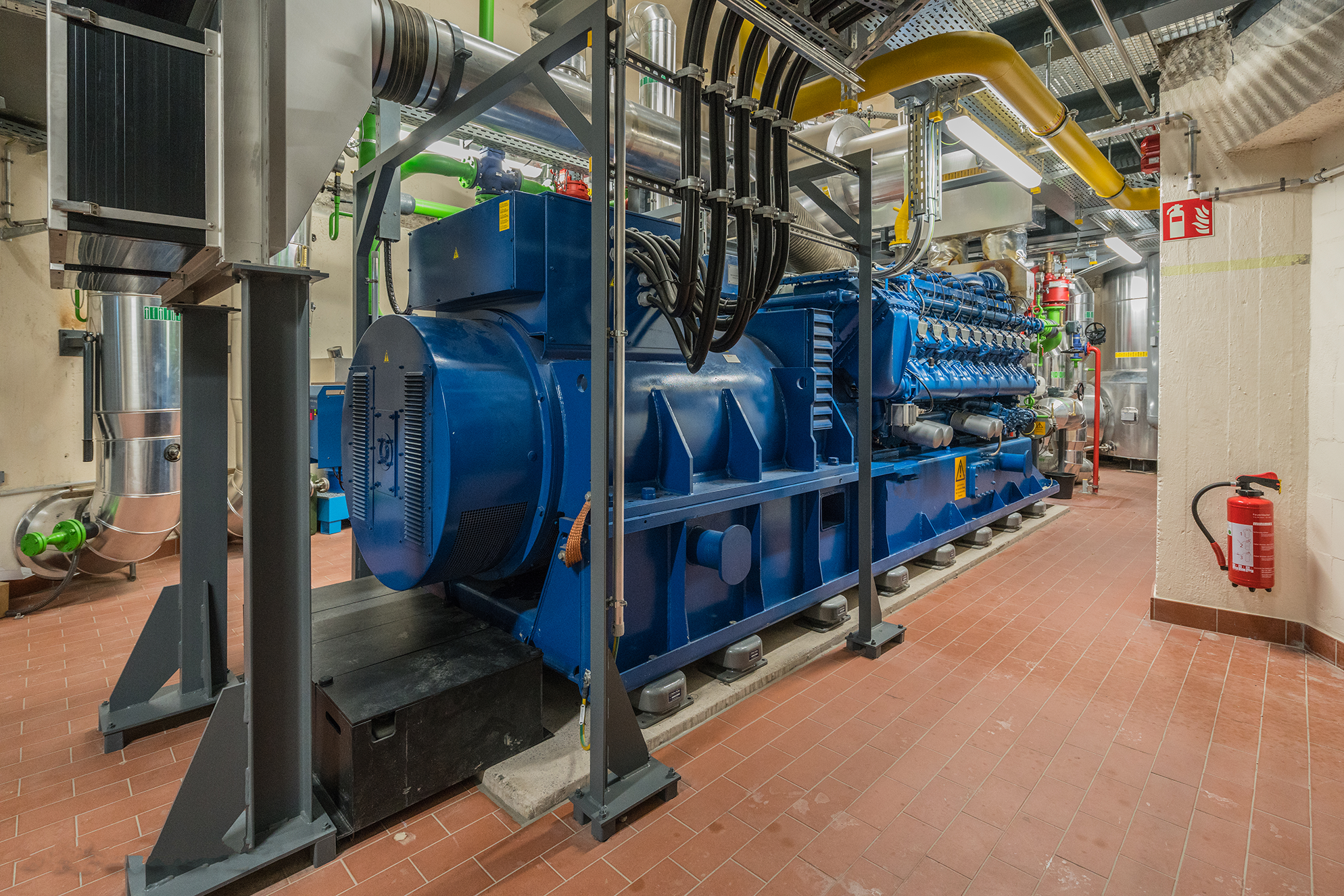
Making good use of waste heat was the norm around the turn of the 20th century, when the electrical grid was still in its infancy. Over time, however, the popularity of Combined Heat & Power (CHP) began to fade. Today, thanks to federal tax credits and evolving technology, CHP — also known as cogeneration — is enjoying a renaissance.
The Ameren Illinois Energy Efficiency Program offers financial incentives and technical assistance to pave the way for greater adoption of this highly effective technology. Here, Ameren Illinois Industrial Energy Advisor Tom Tyler answers frequently asked questions about this increasingly accessible technology.

Tom Tyler
Tom Tyler is a Certified Energy Manager (CEM) and is the Industrial Energy Advisor with the Ameren Illinois Energy Efficiency Program. His background includes facilities engineering, energy management and energy efficiency auditing in industrial facilities. He is a U.S. Air Force veteran and holds a Bachelor of Science in Mechanical Engineering from the University of Pittsburgh.
How does CHP work?
The traditional model for large industrial facilities is to use a boiler to produce the steam needed for operations and then purchase electricity from the local utility or an alternate supplier. With CHP, instead of a boiler, you run a reciprocating engine or turbine, which uses waste heat to produce electricity for your facility.
How much does it cost to install a CHP system?
On average, CHP costs about $2 million/MWh of generating capacity installed. However, that cost can drop dramatically when you take advantage of federal tax credits and utility incentives. In Illinois, the payback period for CHP development can be as low as one to two years.
What are some benefits of CHP?
The most obvious advantage of CHP is that you are basically getting your electricity at no cost. (Annual energy savings can run in the hundreds of thousands of dollars for large facilities.)
There are also significant environmental benefits that can help your company (and state) meet sustainability goals. In addition, customers that produce their own electricity through CHP gain an “energy resilience” benefit because they are protected against costly grid-related power outages.
What kind of businesses are good candidates for CHP?
Thermal load is typically the driver for CHP, so any operation that uses a lot of steam is a good candidate. In Illinois, CHP is most frequently used at facilities such as ethanol plants and chemical plants. The use of methane-powered CHP by wastewater treatment plants is also on the rise. Most recently, in May 2023, the wastewater treatment plant in Danville installed their first CHP.
These days, CHP is feasible on a much smaller scale, too — for example, a hospital that uses steam to sanitize equipment. We are also seeing some very interesting CHP projects where food processing companies are diverting biological waste streams (sugar, milk, flour, etc.) that they would otherwise pay to dispose of. Through a fermentation process, these waste streams are converted to methane, which is used as fuel to provide steam and power for the facility.
How common is CHP in the Ameren Illinois territory?
Ameren Illinois service territory spans 43,700 square miles, or three-quarters of the state. Currently, we only have a few, very large customers that take advantage of CHP. But that’s about to change, as we have about 100 MW of cogeneration currently under development in Ameren Illinois territory. This is huge, considering that just a few years ago, that number would have been zero.
Why the sudden interest in CHP?
There are several reasons we are seeing an explosion of interest in CHP.
Historically, when energy prices were cheap and environmental issues were less of a concern, the payback period was long on CHP – maybe 10 years – so not a lot of people used CHP. With energy prices on the rise in recent years, it’s become more economical to generate your own electricity — and the Ameren Illinois Energy Efficiency Program offers financial incentives to help customers do so.
In addition, thanks to advances in technology over the past 20 years, manufacturers are producing smaller CHP systems with more efficient heat recovery. Now you can buy 500 kW systems and they’re off the shelf, so it’s more cost effective to install.
But the most definitive change in the development of CHP is the Inflation Reduction Act of 2022, which raised the previous 10% tax credit to a baseline tax credit of 30%. Plus, you receive another 10% for buying CHP engines made in the United States, and another 10% if you operate in a federally designated “energy community” (areas most impacted by the shrinking coal industry).
The vast majority of communities in central and southern Illinois – across the Ameren Illinois service territory — are federally designated energy communities. That means our customers could qualify for up to a 50% tax credit, along with incentives from the Ameren Illinois Energy Efficiency Program.
What CHP incentives does the Ameren Illinois Energy Efficiency Program offer?
The incentive is based on the capacity of your system, so the bigger your system, the more money you get from us. On average, Program incentives cover roughly 10% to 20% of CHP project costs. Combined with federal tax credits of up to 50%, a customer could achieve a payback period of two years or less for their CHP system.
What about the environmental benefits of CHP?
CHP offers a huge advantage when it comes to sustainability. On average, CHP reduces your facility’s carbon footprint by about two-thirds. That’s because the electricity you would otherwise purchase in Illinois comes primarily from coal and gas. When you produce your own electricity through CHP, the kilowatts are coming from natural gas that would be burned anyway to sustain your operations.
What is the biggest misconception you’ve heard about CHP?
Because it involves running a large gas-powered engine, many people assume that CHP cannot be good for the environment. However, you’ve got to take your location into account when assessing environmental impact.
In Illinois, CHP offers a net reduction in emissions. That’s because most of the electricity you would otherwise purchase will come from coal-fired generation. In contrast, in Oregon or Washington, where a lot of electricity comes from hydropower, CHP would be a net emitter because they’re not burning gas or coal to make the electricity.
In Illinois, CHP is an environmentally conscious carbon reduction tool that makes sense today and for the foreseeable future.
What assistance is available to help customers explore CHP systems?
We advise any Illinois company interested in CHP to take advantage of the University of Illinois at Chicago’s federally funded Technical Assistance Program. Ameren Illinois customers can arrange a free feasibility study to determine if CHP is economic for your facility. To request a consultation with a Program staff member, call 1.866.800.0747 or visit AmerenIllinoisSavings.com/MFG.
What do you most want Illinois companies to know?
A lot has changed to make CHP more economical than ever. Even if you’ve considered CHP before and it was not viable at that time, it’s well worth revisiting today. The first thing to do is get a FREE feasibility study to see if CHP is right for your facility. There is some urgency around this, as federal tax incentives are tentatively going to start phasing out in 2024.
For more information about Combined Heat and Power, call 1.800.866.0747.